

Oakland Veterinary Referral Services Blog
Pot and Pets
 As medical marijuana becomes more commonplace in Michigan, it’s easy to forget that the drug doesn’t necessarily have the same medicinal (or recreational) effects on our pets as it does for us.
This is especially true of medical grade marijuana, which is often grown to have higher levels of THC (and potency). Or, it has been synthetically formulated to pack a powerful punch in the face of the serious illness symptoms it is designed to treat. Because of this, it’s vitally important to your pets that you don’t become careless with your prescription, and leave it somewhere that is easily accessible to pets.
Here’s what to know when it comes to pot and pets…
Stash Your Stash
Pets are, by nature, curious creatures, and are often curious about whatever captures your attention – especially if it smells interesting. Continue…
When is it Time to Say Goodbye to Your Pet?

As a pet owner, the most difficult decision you will make is the one concerning your pet’s end of life care. While some pets will pass naturally and peacefully at the end of a life well lived, this is often the exception and, sadly, not rule, when it comes to our pet’s passing.
The decision to euthanize a pet is rarely easy, even if it is “for the best”. It is also a deeply personal decision for you and your family, as you are your pet’s voice and care advocate. Our reasons for having our beloved friend and family member cross the Rainbow Bridge are as personal and varied as our relationships with our pets are.
For some it may, heartbreakingly, be a matter of money, and not being able to afford the intensive treatments needed to extend our pet’s life. For others, it may be that our pet’s battle against a life-threatening condition has become too much to bear. While for others, it may simply be Continue…
Understanding Pet Pain
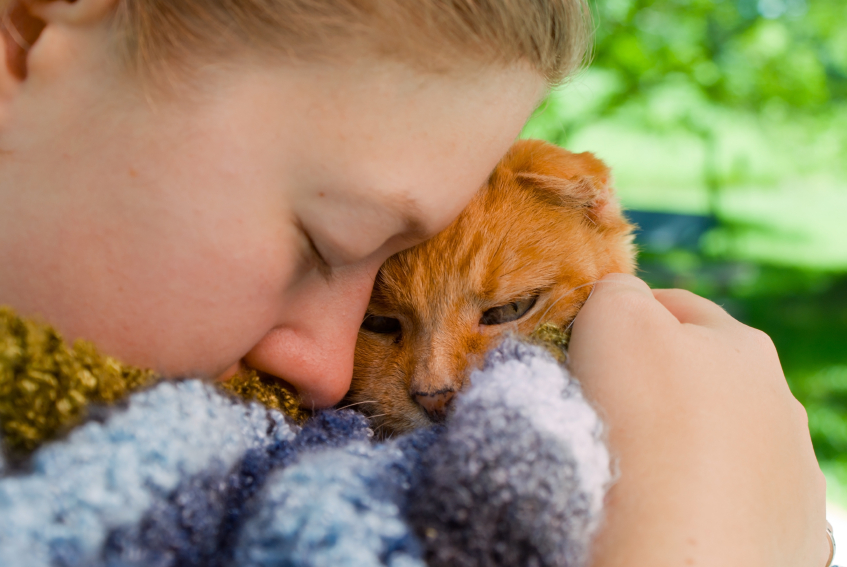
Those in the human medical field have long known the importance of treating pain. Our pets, on the other hand, have gone a long time without us properly recognizing or treating their pain. In recent years, veterinarians have made great strides in doing a better job in recognizing and treating pet pain. Unfortunately, their pain can be difficult to recognize, as animals are very good at disguising discomfort due to instinctive survival mechanisms.
What Causes Pain in Pets?
Pets can experience pain for many reasons. Pain can be due to an injury, a surgery, or a medical condition. It may be acute, or temporary, or chronic. Acute pain might occur immediately after an elective procedure or an accident. Chronic pain might be due to something like arthritis or cancer. Continue…
Post-Surgical Care for Pets

When your pet has surgery, it is common to feel worried and overwhelmed, especially when it comes to the post-surgical care you will need to give your pet at home.
Thankfully, you can rest assured that your veterinarian team is certain that your pet is stable before sending him or her home to recover. And while the vast majority of patients heal without issue, it is important to know what to watch for in the unlikely event that your pet does develop an infection or other issue.
Here are a few tips on how to help your pet heal, and what to know if complications do arise.
Post-Surgical Comfort and Pain Management
If you have ever been under anesthesia, you have a general idea of how your pet feels after surgery. It is very important to make certain your pet has a quiet place to rest and be comfortable. This place should be close enough to the family for your pet to feel secure, but away from the high Continue…
Pet Eye Problems: Corneal Ulcers
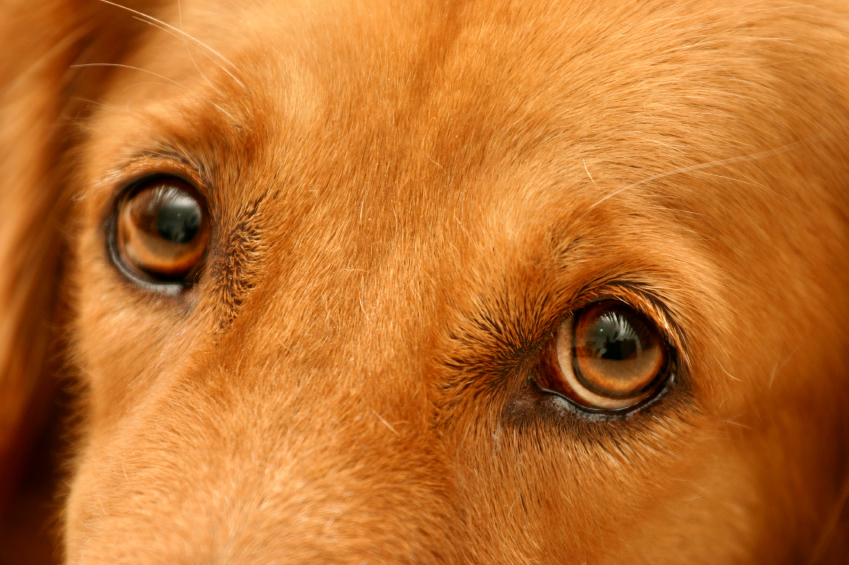 One minute your pet is fine, and the next she is squinting her eye, tearing and reluctant to open the eye. You call the vet and they tell you to come in right away. What could be happening with your pet’s eye health?
One of the most common causes of these symptoms is a corneal ulcer. The cornea is the clear tissue at the front of the eye. Although similar to skin, having an outer epithelial layer, middle stromal layer and inner endothelial layer, the cornea is very thin being approximately 0.5 mm.
If the outer layers of this tissue are damaged then a corneal ulcer or “an open sore” of the tissue develops. There can be many underlying causes including trauma, eyelash problems etc., however many times the underlying cause cannot be determined.
Diagnosis
Your veterinarian can confirm the diagnosis of a corneal ulcer by examining the eye and using a special fluorescent dye applied to the eye to Continue…
Paying It Forward
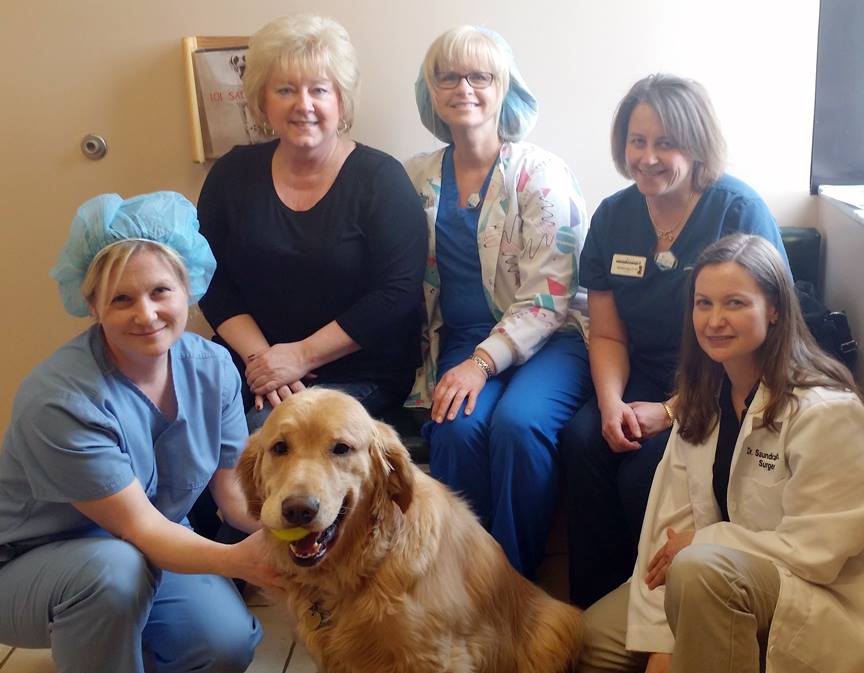
Quinn, a Golden Retriever who is part of St. John Providence health system’s pet therapy program at the Oakland Center, didn’t know that he was “paying it forward” by helping patients through their illness’ and recovery. He was just being a good dog, and doing what he does best: helping those in need. But, as it turns out, that’s precisely what happened.
Last month (February 2014), Quinn suffered from a ruptured cruciate ligament in his knee, and was in need of TPLO corrective surgery if he was going to continue with the important work he does at St. John’s.
When the staff at OVRS heard about Quinn’s condition, we knew we had to help. As a result, on February 22, OVRS’s Dr. Saundra Hewitt performed the surgery on Quinn, free of charge, as a way to say thank-you for all the comfort and good works that Quinn and his fellow therapy animals do for the patients for the St. John Providence health system.
Three weeks later, Quinn is doing great! He’s up and moving and enjoying his “time off” while his incision heals and he regains his strength. As soon as the risk of infection (for all involved) has passed, Quinn will be back to making his rounds at St. John Providence’s Oakland Center, but now with a special understanding of what it means to be the one in need of care.
St. John Providence’s Pet Therapy Program
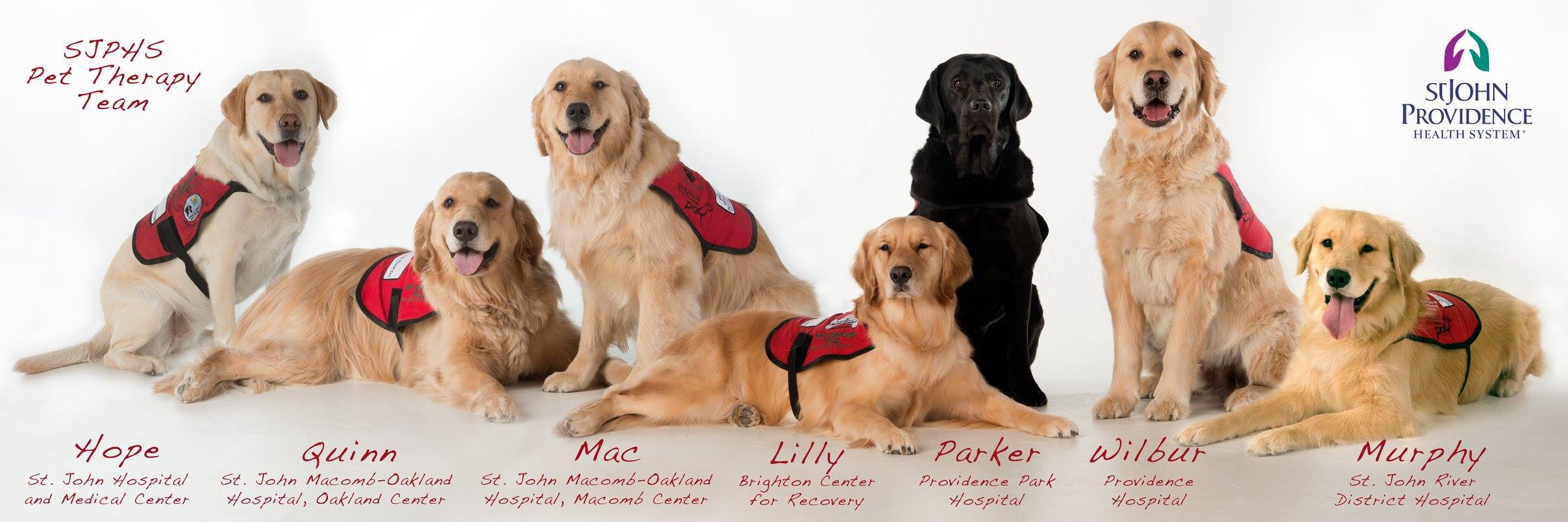
For those of you who are unaware, the St. John Providence health system offers pet therapy for the patients, visitors, and associates throughout the system. Quinn is one of seven dogs participating in the program, along with Parker, Wilbur, Murphy, Mac, and Lilly.
Together, these incredible animals deliver what is often regarded as “the best medicine of all,” a warm heart, a wet nose, and a loving touch. These dogs bring comfort, smiles, and peace to those who spend time at the St. John Providence locations.
As therapy animals, each dog has been specially trained by Paradise Dog Training, and has extensive socialization skills. These amazing volunteers are partnered volunteer dog handlers, and work weekday hours. When not working, Quinn and his associates spend time living with host families as regular dogs.
If you would like to contribute to the pet therapy program at St. John Providence health system, please call Heidi Crisman at (248) 465-4511.
Thank-you Quinn, for all you do. And thank-you Dr. Hewitt, for providing Quinn with the care he needed to continue his work.
Cat Conflict? Consider Our Clinical Trial
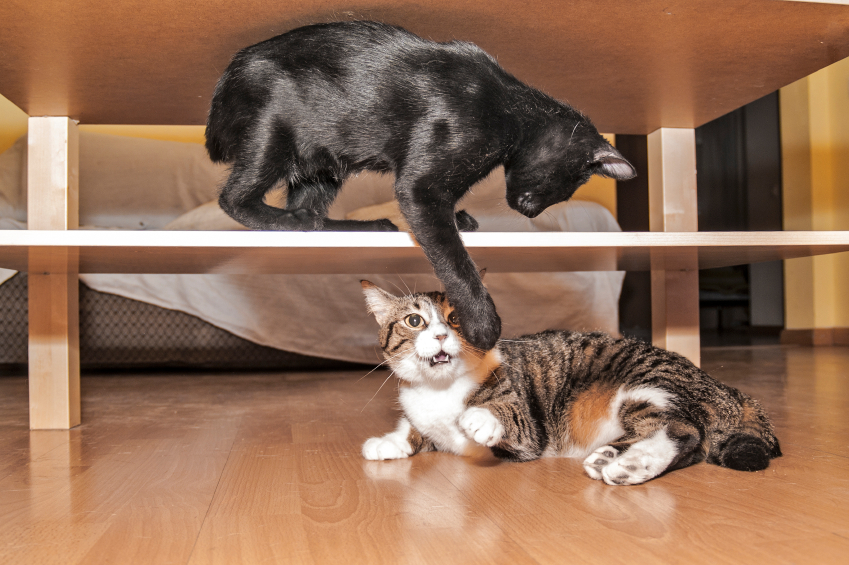 This spring, OVRS’ veterinary behaviorist, Dr. Theresa DePorter, DVM, MRCVS, DECAWBM, DACVB, will be spearheading a clinical trial of a new pheromone aimed at alleviating aggression and tension between cats in a multi-cat household.
If your cats are prone to fighting amongst themselves this clinical trial may be an exciting opportunity for you and your cats. If you are interested in participating in the study, here are the qualifications and requirements for your consideration.
Are Your Cats Fighting?
Feline housemates don’t always get along. Aggression may include fighting but often occurs as passive blocking and staring. Feline victims may hide, flee or even scream when attacked. Thankfully, there is new hope for peace and harmony among your feline friends. Continue…
Coping with Pet Loss in a Family
 The loss of a beloved family pet is probably the most difficult aspect of pet ownership. This is especially true when there are children in the home. Often, the loss of a pet is the first experience that young children will have with death and grieving, and may be especially difficult to understand. .
Everyone in the family will react to the loss differently, and it is important to understand that age, life experience, and personality all play a part in how a person handles grief.
As parents, it is important to understand how children handle grief, so that you can help them through this difficult time. Here are some insights when it comes to coping with pet loss in a family. Continue…
How Do I Volunteer My Dog?
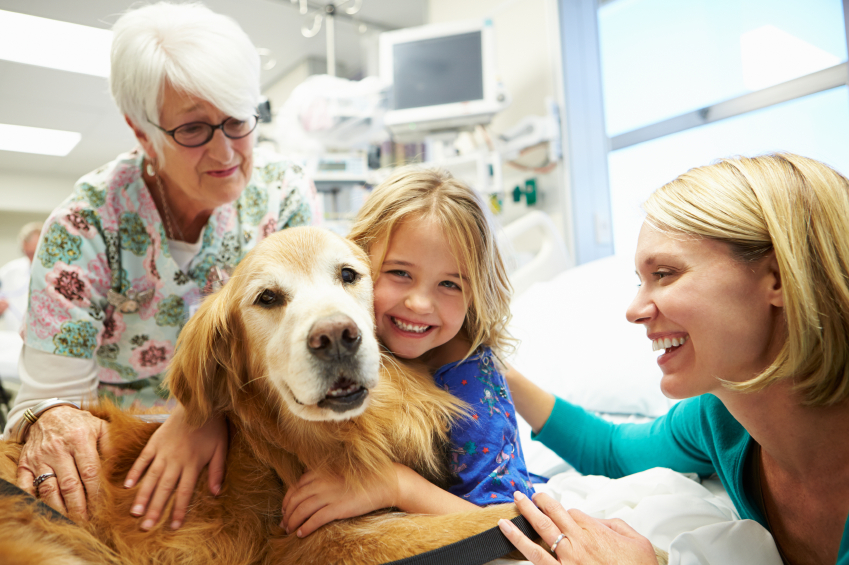 For many of us, giving back to our community is an important part of our life. But did you know that pets could be volunteers too?
Therapy animals are becoming more common and more active than ever before, and the demand for these special animals is growing by leaps and bounds. Volunteer pets have making the world a better place in senior centers, retirement homes, schools, and rehab centers for years, and their popularity is growing as their good works are proving to be effective.
If you’ve ever asked yourself, “How do I volunteer my dog?” then read on for an introduction to volunteering your pet. Continue…
Why Are Pets Good For You?
 This past year, the American Heart Association reported scientific evidence to support the notion that pets actually have the ability to improve our heart health.
And while there’s no denying that there are times our pets drive us a little crazy, and can cause us heart ache, most pet owners were not surprised by this “discovery”.
But for all the feel-good reasons there are when it comes to why pets are good for you, do you actually know the reasons that pets can help to keep us healthy? While the list could go on and on, here are the top two reasons that pet’s are (scientifically) good for you… Continue…